LGBTQIA+ in STEM
Importance of the human diversity
in knowledge generation process
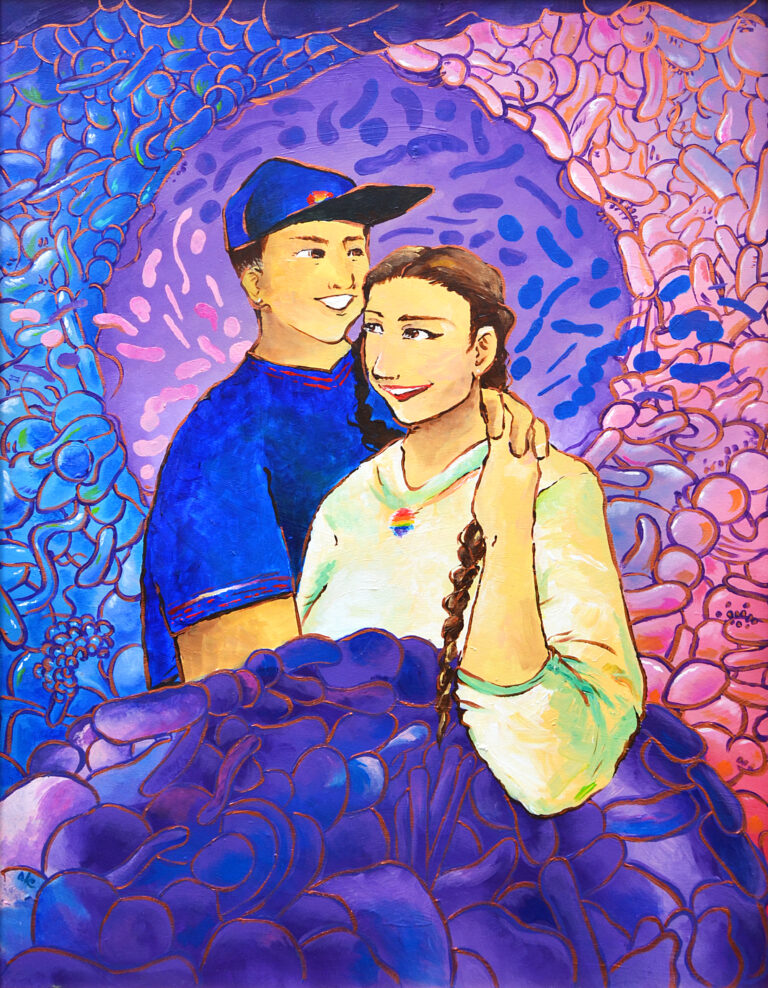
In an ecosystem, a wide variety of (micro)organisms coexist, each with different abilities and potentials that enrich the place they inhabit. They interact within eachother and their surroundings. Something similar occurs in our social contexts, where diverse spaces can bring together perspectives and realities that we often overlook.
There are plenty or reasons why we need diversity in research. Among them, we can register other experiences, find novel reflections and points of view, decrease our perspective bias and motivate others to study science.
We exist and belong in all spaces,
our perspectives deserve to be heard and valued in spaces for knowledge generation.
"We are an Ecosystem" Exhibition, a diverse experience
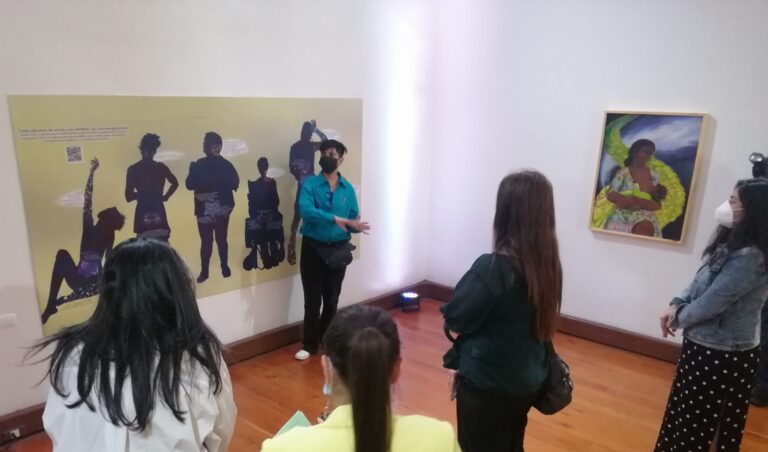
The exhibition “We are an ecosystem, a journey through the human microbiome,” was held during 2021 in Antofagasta, Chile. This was a project that brings together science, art, and education to rethink ourselves as an interconnected ecosystem between our person and the microorganisms that inhabit us, called the microbiome.
This exhibition highlights microbial and human diversity, Our team was composed by BIPoC women and non-binary people from northern Chile. Our vision outside the capital Region, decentralized and dissident, creates a unique and captivating work, which uses global knowledge in the local context
of the Antofagasta Region.
During the excecution of this project, I was just starting to talk more openly about my gender identity, and the team supported me in the whole time to be loud and proud of myself. Even they support me to write about my own identity in a column for the pride in STEM in 2021, which this text is based on. As non-binary person (part of the trans spectrum) with Aymara roots, my way to see the world was different of the stablished, and was really important to all of us to integrate this view on it. How can be integrated? By questioning the methologies of the microbiome research, to be aware of the research bias and highlight the imporance to integrate diversity in our research teams and research focus, to draw different people, so we all can be seen.
This was well received by the community and many were really glad to see new styles and diversity in the graphics and people who participated in the activities. The support of everyone at the team and the assistants left a deep mark on myself, and motivated me to continue this path.
“We are an Ecosystem” was funded by the Open Science program (Ciencia Pública 2020) from the Chilean Ministry of Science, Technology, Knowledge and Innovation. Its website -in Spanish- is still available as archive.
Continue growing in our diversity
To be an LGTBIQIA+ person (Lesbian, Gay, Trans, Bisexual, Queer, Intersex, Asexual, and more) continues to be a challenge to exist openly in academic spaces and the development of knowledge. Studies and experiences highlight that living without fear involves resisting a reality with serious problems that persist despite the increase in initiatives on diversity and gender equity. That is why November 18 is Pride in STEM, where we internationally highlight our diversity as LGTBIQIA+ people in spaces of Science, Technology, Engineering, and Mathematics.
Diversity is our greatest strength, and diverse communities are key in all ecosystems, including our own.
To talk about our diversity is highly relevant, specially nowadays. It is imporant to know that we are valid and feel proud of who we are, even if others make us feel otherwise. We exist in all spaces, and we must be respected and listened to!
Thank to everyone who support me to feel confident in speaking about this. Thanks to that exhibition, I have been able to continue talking about human and microbial diversity, and I have had the opportunity to present on this topic in Germany, Chile and the USA, as well as continue approaching creatively to this field.